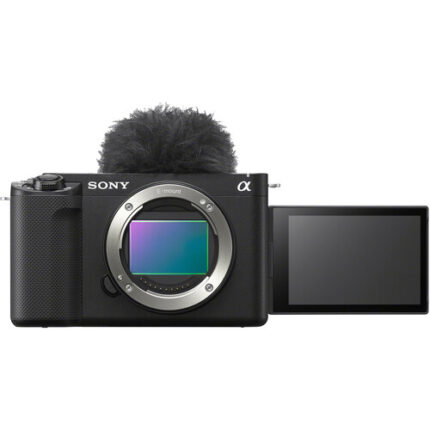
Nikon Z6 III Mirrorless Camera
Original price was: ₦3,100,000.₦2,800,000Current price is: ₦2,800,000.
- 24.5MP Partially-Stacked CMOS Sensor
- EXPEED 7 Image Processor
- 6K 60p N-RAW, 6K 30p ProRes RAW
- 4K 120p, Full HD 240p Slow Motion Video
- Up to 20 fps Raw, 60 fps JPEG Shooting
- Blackout-Free, 5760k-Dot EVF
- 493-Point AF, AI-Based Subject Detection
- 3.2″ 4-Axis Tilting Touchscreen LCD
- CFx Type B & SD Memory Card Slots
- Camera-to-Cloud Direct Connectivity
| Brand | NIKON |
|---|
Nikon Z6 III Mirrorless Camera


Utilizing inherited algorithms and deep learning technology from the Z9, including sophisticated Subject Detection, the Z6 III can recognize a variety of distinct subject types, ranging from humans to animals to airplanes to bicycles. When working in Auto-Area AF, these subjects will automatically be detected, focused on, and tracked to ensure sharp focus when the subject is moving across the frame.
Eye-Detection AF, specifically, has been tuned for improved accuracy and refined recognition of eyes in the scene, regardless of how small or large they are within the image frame, and can also be used in conjunction with custom Wide-Area AF for different subject shapes and sizes.

Perfect for portraits, the Z6 III improves on the partially-stacked sensor’s inherent capabilities with a series of processing tools and shooting functions to improve portraits:
- Portrait mode processes portraits for skin with natural texture and a rounded feel
- Rich Tone Portrait mode, a picture mode that produces more vivid results while capturing details of the subject’s complexion and avoiding loss of detail in the highlights
- Flat Monochrome mode features gentle gradations from highlights to shadows, producing soft monochrome portraits
- Deep Tone Monochrome mode chooses slightly darker tones in the range from shadows to mid-tones, with brightness rapidly increasing as tones progress from mid-tones to highlights
- Skin softening can be used on up to three subjects in a shot and slightly blurs the skin for a more pleasing texture while still retaining essential sharpness on eyes and hair
- Manual white balance control is more intuitive when making adjustments and Auto WB has also been optimized for human subjects
- Take full advantage of Nikon’s portrait modes by pairing the Z6 III with one of Nikon’s portrait Z lenses, like the 50mm f/1.2 S, the 85mm f/1.2 S, or the 135mm f/1.8 S Plena

Equally capable for video, the Z6 III matches the Z9’s recording capabilities here, as well, with a variety of resolutions and frame rates available up to 6K.Using full pixel readout, 6K60p video can be recorded with continuous shooting, while 4K and Full HD recording is also possible in a variety of frame rates, including full-frame 4K recording at up to 120p and Full HD recording at 240p for slow-motion playback.
Internal 12-bit raw raw recording at up to 6K 60p in the N-RAW format is supported along with internal ProRES RAW HQ. Raw recording offers greater tonal and color latitude and can improve dynamic range, benefitting color grading needs and post-production flexibility.
- N-RAW is Nikon’s own raw recording format that offers impressively small file sizes compared to other raw formats as well as the ability to create MP4 proxies for more efficient previewing or transferring.
- N-RAW recording is available at up to 6K at 60p and ProRes RAW is also available at up to 6K and 30p.